
Data of InnoCare’s (HKEX: 09969; SSE: 688428) robust pipelines were presented at the European Hematology Association (EHA) 2024 Hybrid Congress.
1. Subcutaneous ICP-B02 (CM355), a Novel Bispecific CD20/CD3 Antibody Showed Promising Efficacy and Favorable Safety Profile in Relapsed/Refractory B-cell Non-Hodgkin Lymphoma (Abstract No.: P2097)
This study aimed to evaluate the safety, tolerability, efficacy, pharmacokinetics (PK)/ pharmacodynamics (PD) of ICP-B02 in relapsed/refractory (R/R) B-cell non-hodgkin lymphoma (NHL). At the doses evaluated, ICP-B02 subcutaneously (SC) demonstrated a favorable safety profile and promising efficacy in patients with R/R B-cell NHL. All Cytokine release syndrome (CRS) events were manageable with minimal intervention. Rapid and deep responses, as well as the convenience of SC formulation, support further clinical development for treatment of B cell NHL.
Efficacy results showed that the overall response rate (ORR) was 100.0% with complete response rate (CRR) was 77.8%.
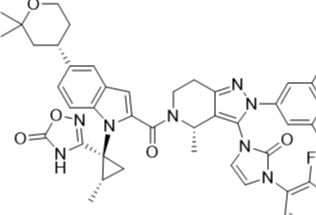
2. Preliminary Safety and Efficacy Data from Patients with Relapsed or Refractory B-Cell Malignancies Treated with ICP-248, a Novel BCL2 Inhibitor (Abstract No.: P1851)
This study aimed to evaluate the safety, tolerability, pharmacokinetics, pharmacodynamics, and preliminary efficacy of ICP-248 in patients with relapsed or refractory B-cell malignancies.
Preliminary results of ICP-248 monotherapy suggest a well-tolerated safety profile and promising efficacy with dose-dependent effect in relapsed or refractory B-cell malignancies. The ORR was 100% at 100 mg dose level, with three patients achieving complete response. Further assessment of safety and efficacy with additional dose levels and dosing strategies will be pursued in an expanded patient population and in the combination with Orelabrutinib.
3. A Phase II, Single-Arm, Open-Label Study to Evaluate the Safety and Efficacy of Tafasitamab Combined with Lenalidomide in Patients with Relapsed/Refractory Diffuse Large B-Cell Lymphoma (Abstract No.: P2091)
Relapsed/refractory diffuse large B-cell lymphoma (R/R DLBCL) remains a highly unmet medical need, especially in patients who are ineligible for autologous stem cell transplant (ASCT). The study demonstrates that the tafasitamab plus lenalidomide regimen is well tolerated in Chinese population with good efficacy. The efficacy and safety data are consistent with the L-MIND study.
As of the data by Jan. 29, 2024, the ORR assessed by IRC was 73.1%, with 32.7% of patients achieving CR and 40.4% of patients with partial response (PR). The ORR assessed by investigators was 69.2%, with 34.6% of patients reaching CR and 34.6% of patients achieved PR.
4. Orelabrutinib-Lenalidomide-Rituximab in Patients with Untreated Mantle Cell Lymphoma (MCL): Updated Results of the Multicenter, Phase II Polaris Study (Abstract No.: P1141)
This study aimed to explore whether orelabrutinib combined with rituximab plus lenalidomide would exhibit synergistic antitumor activity in mantle cell lymphoma (MCL) and improve the depth and durability of response. The data confirmed the potent antitumor activity and manageable safety of the orelabrutinib-lenalidomide-rituximab regimen in patients with untreated MCL. Detection of peripheral blood (PB) ctDNA detection based on NGS could contribute to predicting prognosis.
Of response-evaluable patients who had completed 6 cycles of induction therapy, 67.9% achieved CR and 17.9% achieved PR, with an ORR of 85.8%. Median duration of response (DOR) and median progress-free survival (PFS) were not reached.
5. Orient Study: Orelabrutinib Addition to R-Chop-Like Regimen Adapted to Response in Treatment-Naïve Non-GCB DLBCL (Abstract No.: P1167)
This is a multicenter, open-label phase II study, aiming to assess efficacy and safety of orelabrutinib plus R-CHOP-like regimen for untreated non-GCB DLBCL patients who respond to induction therapy of orelabrutinib plus rituximab. Primary endpoint was complete remission rate (CRR) after 6-cycle orelabrutinib plus R-Chop-like regimen. All the patients who completed 6-cycle therapy attained CR at the end of cycle 6.
Although preliminary, responders to orelabrutinib plus rituximab induction may further benefit from subsequent orelabrutinib plus R-Chop-like regimen, achieving high CRR and sustaining CR throughout post-therapy follow-up; no unexpected safety issues occurred.
<...



























 (All Rights Reserved)