
CStone Pharmaceuticals ("CStone", HKEX: 2616), a leading biopharmaceutical company focused on researching, developing and commercializing innovative immuno-oncology therapies and precision medicines, today announced that efficacy and safety data from a cohort of Chinese patients with RET fusion-positive non-small cell lung cancer (NSCLC) in a global trial of GAVRETO® (pralsetinib) were reported in an oral presentation at the IASLC 2021 World Conference on Lung Cancer (WCLC), hosted by the International Association for the Study of Lung Cancer. The results show that GAVRETO had robust and durable anti-tumor activity and a generally well-tolerated safety profile in patients enrolled at China sites who had advanced RET fusion-positive NSCLC, with no new safety signals detected. This is the first time that data on GAVRETO for the first-line treatment of Chinese patients with RET fusion-positive NSCLC have been presented at an international academic conference. CStone plans to submit a supplemental new drug application (NDA) for this indication to the National Medical Products Administration (NMPA) of China.
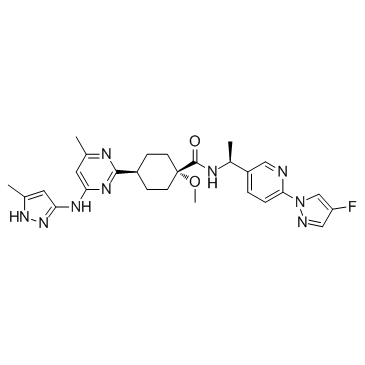
GAVRETO is a selective and potent RET inhibitor discovered by CStone's partner Blueprint Medicines. CStone has an exclusive collaboration and license agreement with Blueprint Medicines for the development and commercialization of GAVRETO in Greater China, which encompasses Mainland China, Hong Kong, S.A.R., China, Macau, S.A.R., China and Taiwan, China.
The ARROW study (ClinicalTrials.gov identifier: NCT03037385) is a global phase 1/2 clinical study designed to evaluate the safety, tolerability and efficacy of GAVRETO in patients with RET fusion-positive NSCLC, RET-mutant medullary thyroid cancer (MTC) and other advanced solid tumors with RET fusions.
As of a data cutoff date of April 12, 2021, a total of 68 patients with advanced RET fusion-positive NSCLC from 10 sites were enrolled in the China cohort of the global ARROW study, and received a starting GAVRETO dose of 400 mg once daily. Among these patients, 37 patients received prior platinum-based chemotherapy, and 31 patients received no prior systemic treatment. Tumor response was assessed by blinded independent central review (BICR) using Response Evaluation Criteria in Solid Tumors (RECIST) version 1.1.
Efficacy: GAVRETO is a promising targeted therapy with rapid and durable clinical activity in Chinese patients with RET fusion-positive NSCLC regardless of prior therapy.
For patients who have previously received platinum-based chemotherapy (n=33, measurable disease at baseline):
- The confirmed overall response rate (ORR) was 66.7%, including 1 complete response (CR) and 21 partial responses (PR). The disease control rate (DCR) reached 93.9%.
- Among 22 patients with confirmed response, the median time to first response was 1.89 months.
For patients who have not received prior systemic treatment (n=30, measurable disease at baseline):
- The confirmed ORR was 80%, including 2 CRs and 22 PRs. The DCR was 86.7%.
- Among 24 patients with confirmed response, the median time to first response was 1.87 months.
Safety: GAVRETO was generally well-tolerated with a manageable safety profile
GAVRETO was generally well-tolerated. The overall safety in Chinese patients was manageable, with no new safety signal detected.
Professor Yi-Long Wu of Guangdong Provincial People's Hospital, a Principal Investigator of the ARROW study, said, "As the first RET inhibitor approved in China, GAVRETO fills a gap for the treatment of patients with RET fusion-positive NSCLC. The updated data not only further demonstrate that GAVRETO had proven efficacy and well-tolerated safety in second-line treatment settings, but more importantly show it had even better anti-tumor activity in Chinese patients with RET fusion-positive advanced NSCLC with no new safety signal detected. I look forward to seeing GAVRETO benefit more Chinese patients in the future."
Professor Qing Zhou, professor of Guangdong Provincial People's Hospital, the presenter for this report, said, "Since reporting data on GAVRETO for the second-line treatment of Chinese patients with RET fusion-positive NSCLC &n...
































 (All Rights Reserved)