
On May 25, the CDE official website revealed that the marketing application for the first-in-class "TQ-B3525 tablets" by Chiatai Tianqing was proposed to be included in the priority review for the treatment of recurrent or refractory follicular lymphoma (FL) patients who have previously received at least two systemic therapies.
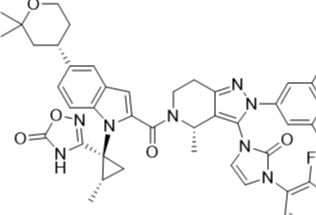
TQ-B3525 is a new phosphatidyl inositol 3-kinase (PI3K) α/δ dual inhibitor developed by Chiatai Tianqing, which inhibits the expression of PI3K protein and reduces AKT protein phosphorylation levels to induce cell apoptosis and then inhibit the proliferation of malignant tumor cells.
By selectively inhibiting PI3Kδ and PI3Kα subunits, TQ-B3525 can overcome the drug resistance problem caused by the PI3Kα up-regulating activity due to individually inhibiting PI3Kδ. Early clinical research data have confirmed the oustanding therapeuticl effect of TQ-B3525 tablets in advanced malignant tumors, such as recurrent/refractory FL.
The results of phase 1 clinical trial show that: TQ-B3525 is well tolerated in Chinese patients with advanced malignant tumors and has high anti-tumor activity in patients with recurrent or refractory lymphoma.
In July 2021, TQ-B3525 was included in the category of breakthrough therapy designation by CDE for the treatment of recurrent/refractory FL patients who have previously failed at least second-line treatment.
On May 22, Sino Biopharm announced that the phase 2 critical registered clinical trial of TQ-B3525 for the treatment of recurrent or refractory FL patients who have previously received at least second-line systemic treatment had reached the primary endpoint.
FL is the second most common non-Hodgkin's lymphoma (NHL). In China, 8.1% to 23.5% of FLs are NHL, and about 80% of the patients are in the advanced stage (III/IV) when diagnosed. Although FL is classified as indolent lymphoma, the vast majority of patients will experience multiple relapses and progression with invasive diseases, which may lead to death within 1-2 years. Currently, FL is an incurable disease, and the treatment options for recurrent/refractory FL in China are limited, with unmet clinical needs.
This proposed inclusion of TQ-B3525 in the priority review by CDE will accelerate its approval for marketing in China. We look forward to its early approval in the future to benefit FL patients.
Advance in PI3K and Its Inhibitors Research
PI3K (full name: phosphatidyl inositol 3-kinase) is an intracellular lipid phosphokinase composed of the p85 regulatory subunit, p55 regulatory subunit, and p110 catalytic subunit. Based on the different structures and substrates, PI3K can be divided into class I, class II, and class III. Class I PI3K is a heterodimer composed of PI3K catalytic subunits and regulatory subunits, which is currently the most deeply and extensively studied subtype and has the closest relationship with tumors.
Class I PI3K can be further divided into class IA and class IB by the catalytic subunits. The catalytic subunits in class IA PI3K include three proteins, i.e., p110α, p110β, and p110δ, while class IB PI3K only contains the p110γ catalytic subunit. Class IA PI3K is closely related to the occurrence and development of tumors, among which PIK3CA, the gene that compiles PI3Kα, is the most common mutation in tumors. After the mutation, PIK3CA can abnormally activate PI3Kα while inhibiting the expression of the tumor suppressor gene PTEN, and therefore PI3Kα is a vital target in drug R&D. The expression of PI3K varies among different catalytic subunits. For example, PI3Kα and PI3Kβ are expressed in multiple cells, and PI3Kδ and PI3Kγ is only expressed in the immune system.
PI3K is a key regulatory kinase in the PI3K/AKT/mTOR signaling pathway, which is involved in regulating cell proliferation, differentiation, apoptosis, and angiogenesis. Its abnormal activation is closely related to the occurrence and development of various tumors. At present, seven PI3K inhibitors have been ap...



























 (All Rights Reserved)