
During this year's National People's Congress and Chinese People's Political Consultative Conference, the term "innovative drugs" was included into the government work report for the first time. The Central Economic Work Conference in 2023 emphasized the need to promote industrial innovation through scientific and technological innovation, especially by fostering new industries, new models, and new growth engines with disruptive and frontier technologies, and developing new forms of productive forces. Industry insiders widely acknowledge that the central government has elevated the biomedical industry to an unprecedented level, placing great expectations on it. Pharmaceutical companies in China have lived up to these expectations and developed products with global competitiveness, striving to become "Billion Dollar Molecules". So, how much potential do these benchmark products on the path of innovation have?
Zanubrutinib
When it comes to Billion Dollar Molecules made in China, BeiGene's Zanubrutinib cannot be ignored. Zanubrutinib is a BTK inhibitor self-developed by BeiGene. Currently, it has been approved for multiple indications globally, including chronic lymphocytic leukemia (CLL), Waldenström's macroglobulinaemia (WM), mantle cell lymphoma (MCL), and marginal zone lymphoma (MZL). It is the BTK inhibitor with the most approved indications.
At the same time, Zanubrutinib has the potential to be best in its class, which stems from its unique design. In tests comparing it with Ibrutinib, the world's first BTK inhibitor approved for marketing, BeiGene found that the efficacy of BTK inhibitors depends on inhibiting BTK and has no relation to other targets. Additionally, it identified significant issues with adverse reactions and first-pass metabolism in Ibrutinib. In response, BeiGene decided to optimize selectivity and absorption to improve product quality. Ultimately, Zanubrutinib became the only BTK inhibitor to demonstrate superiority compared to Ibrutinib in head-to-head tests. It is currently approved in over 70 markets, including the United States, China, the EU, the United Kingdom, Canada, Australia, South Korea and Switzerland.
The potent efficacy helps Zanubrutinib to increase sales rapidly. In 2023, the sales volume of Zanubrutinib surpassed the USD billion mark for the first time, reaching USD 1.3 billion, making it the first "blockbuster drug" in China. In the first half of 2024, the sales volume reached new highs, with USD 489 million in Q1 and USD 637 million in Q2, with a year-on-year increase of 107%.
Fruquintinib
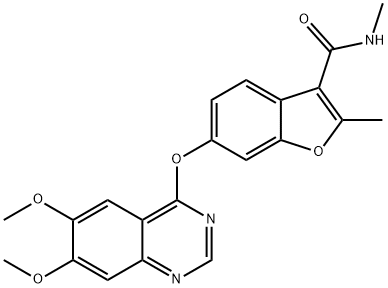
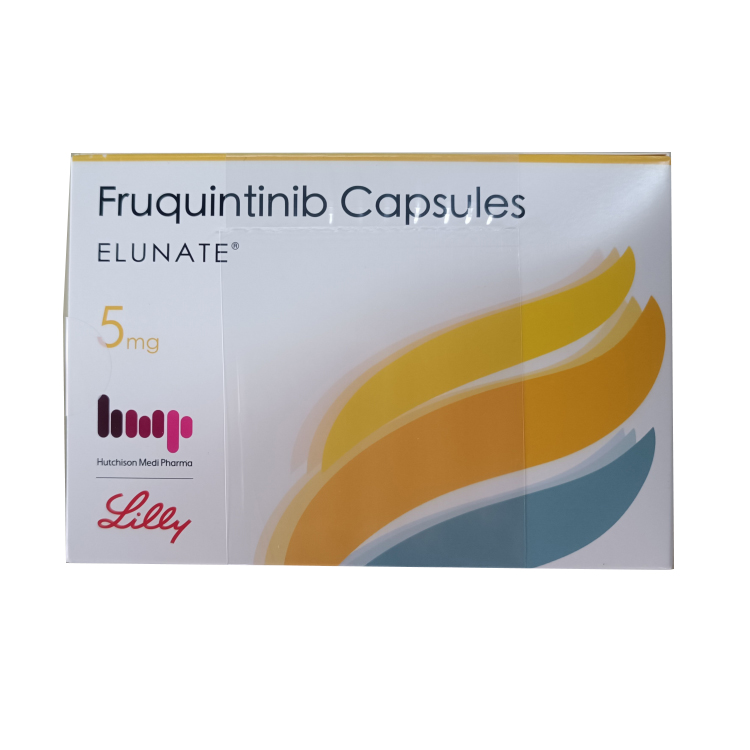
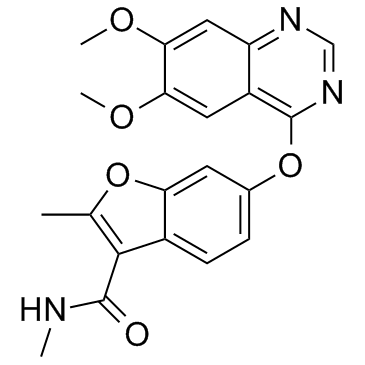
Fruquintinib is an orally administered multi-target VEGFR inhibitor developed by Hutchmed, which highly selectively inhibits VEGFR1-3. VEGFR inhibitors are pivotal in inhibiting tumor angiogenesis. Fruquintinib is designed with higher kinase selectivity to reduce off-target kinase activity, achieving higher drug exposure, sustained target coverage, and greater flexibility when potentially used as a combination therapy.
In March 2023, Takeda and Hutchmed reached an exclusive licensing agreement to further advance the development, commercialization, and production of fruquintinib globally, excluding Chinese Mainland, Hong Kong, and Macao. In November 2023, fruquintinib successfully obtained approval from FDA for marketing, becoming the first and only highly selective inhibitor targeting all three VEGF receptor kinases approved in the United States for the treatment of previously treated metastatic colorectal cancer (mCRC).
It is worth mentioning that within 48 hours of its launch in the United States, a doctor prescribed the first prescription of fruquintinib, and within a week, NCCN guidelines ...































 (All Rights Reserved)