

2020 has been a tough year. The pandemic posed an array of challenges to the healthcare system and the global biopharmaceutical industry both rose to the challenges and seized opportunities.
Biosimilars offer the potential for more treatment options and affordable alternatives. Experts suggest that the broader adoption of biosimilars could lead to greater competition, ultimately reducing medical and surgical supplies costs and enabling wider access to life-saving drugs.
Year 2020 - Low approvals, but significant advances
The year 2020 saw just three biosimilar approvals from the United States Food and Drug Administration (FDA), while the European Medicines Agency (EMA) approved nine products.
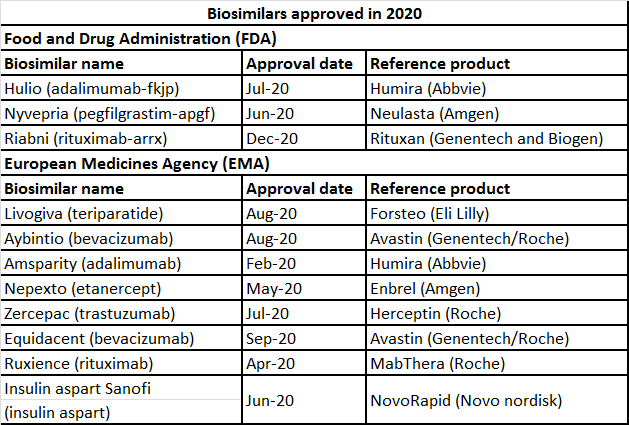
The number of biosimilars approved in 2020 was low; however, there were great advances in clinical testing of new biosimilars, collaborations/deals, and exploration of innovative ways to implement biosimilars as a cost-saving strategy.
Biosimilars in China – An overview
The United States and Europe together account for more than 90% of biosimilars sales; however, there has been tremendous progress in the biopharmaceutical markets in East Asian countries such as China.
There is a huge unmet medical need for affordable biologics in China. Biosimilar drugs appear to be the best alternate solution for improving access to life-saving biologics.
In February 2019, China’s National Medical Products Administration (NMPA) approved the country’s first-ever biosimilar product, Hanlikang/HLX01 (rituximab), a monoclonal antibody developed by Henlius Biopharmaceutical. Hanlikang/HLX01 references Genentech and Biogen’s Rituxan (rituximab) and is indicated for non-Hodgkin’s lymphoma. This approval flagged off the biosimilar boom in China. The latest to join the list of approved biosimilars in China is adalimumab biosimilar, HLX03, developed by Henlius Biotech. The product was approved by NMPA on 7 December 2020.
Below is the list of biosimilars approved in China.
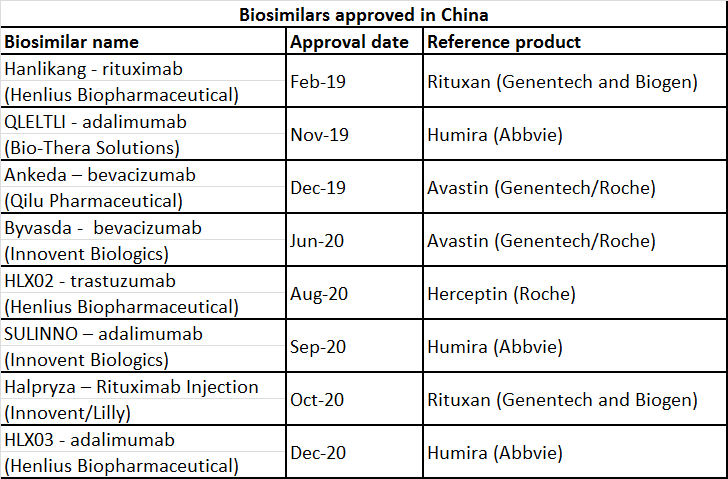
Despite the late start, it has been reported that China has approved more than 200 clinical trials for biosimilars and this is reflected by an increasing pace of approvals and other activity starting in the later part of 2019.
Countering biosimilar disparagement and misinformation
Despite the noted benefits and cost-saving opportunity, biosimilar use is still limited in some healthcare systems because they are not well understood by many health care professionals and patients. There are several different types of disparagement and misinformation related to biosimilars, which hampers their acceptance and market penetration.
As per an opinion piece published in the journal BioDrugs in 2020, disparagement and misinformation about biosimilars can be countered by balanced educational outreach across stakeholders, appropriate regulatory oversight, and use of enforcement powers already granted to government agencies.
Regulatory Challenges for Biosimilars 2020 - WHO Survey of 20 countries
Despite progress with many aspects of the development of biologicals and especially biosimilars, the diversity of regulatory frameworks has presented significant challenges in many countries. A recent WHO survey, which included 20 countries, revealed four main challenges with biosimilars.
· Unavailability or insufficient reference products in particular countries
· Lack of resources
· Problems with the quality of some biosimilars
· Difficulties with interchangeability and naming of biosimilars
The authors recommended potential solutions, noting tha...































 (All Rights Reserved)