

Water is the primary raw material used in the Pharma industry. It is used as a raw material in manufacturing pharmaceutical products in various forms, such as parenteral, oral solid, and liquid. It is also used in laboratories for sample preparation and chemical reagents for using it across multiple test forms.
Water for pharmaceuticals must be carefully produced, stored, and distributed with a high degree of quality and contamination control. Because if not carefully controlled, contamination can be developed in water and become hazardous for every pharma process where it is being used. So to mitigate and prevent risks related to contamination, and other hazards, water must meet the required quality standards.
Standard processes in generating water for pharmaceutical use
There are various methods and equipment to generate water for pharmaceutical use. Every process can generate water of specific specifications, which can then be used for a particular production process.
The process and equipment used in water generation can vary depending on the type of water, its application, product attributes, and quality requirements. Overall, the water generation process can be categorized into three different procedures
Generation
Storage
Distribution
Water generation
Water generation refers to the techniques, equipment, and processes used in generating water for pharmaceutical use.
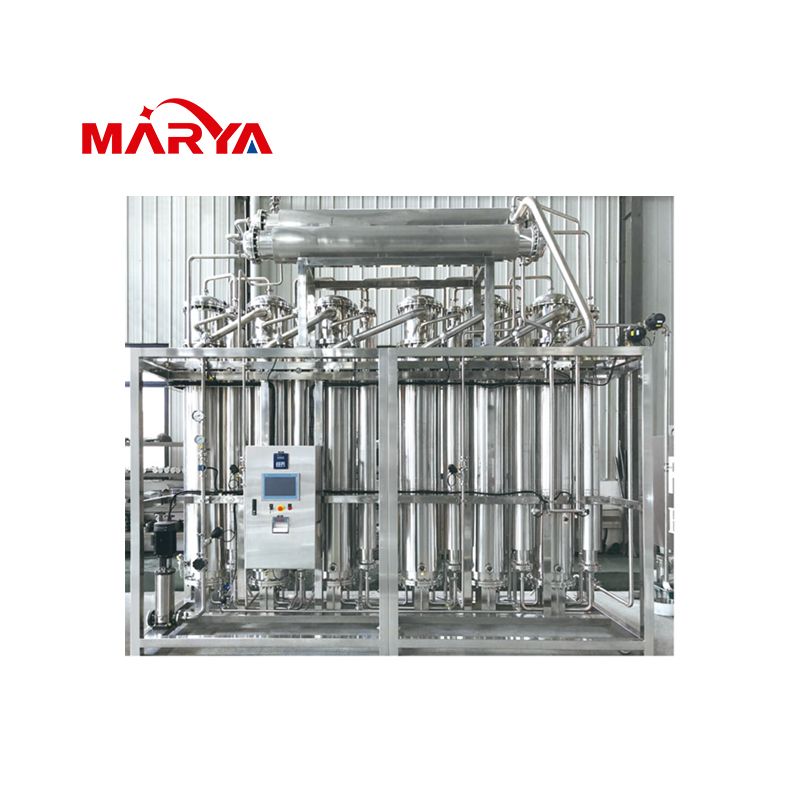
Water generation usually consists of a series of equipment that performs various processes. Water enters the process cycle in a raw form, and as it advances from one equipment or stage to its next level, different change occurs in the properties of water.
When water comes out of the final process or stage, it contains the required essential properties for use in the Pharmaceutical process and application.
Generally, the capacity of water generation equipment is mentioned in liter/hour, i.e., the amount of water indicated in liters that can be produced in one hour.
Storage
Water generated from the generation plant is not directly sent to its intended application area. Instead, it is stored in bulk storage vessels with large storage capacities. The capacities of these storage vessels are indicated in large quantities, typically in thousands of liters, such as 6000 liters.
The main reason for storing Pharmaceutical water is to provide the required quantities per the production process requirement. Because sometimes, the capacity of water generation does not match the amount of water needed for the Pharmaceutical facility. Secondly, there is expected to be no demand in the Pharma plant during water generation hours, and water will be stored to provide whenever there is a requirement. So far, for these reasons, and like these, water is stored in a storage section before distributing it.
Storage mainly consists of vessels that provide suitable storage capacity. The vessels should prevent contamination and bio-burden development in the stored water. Storage vessels must also ensure that water properties are retained and should not disturb these.
Storage vessels should have specific, pharma-grade characteristics that prevent water degradation and retain their properties.
Storage vessels must comprise SS 316L, which provides excellent resistance to chemical reactions between water and vessel material. The internal surface of the vessel should be electro-polished with a mirror finish.
Storage vessels also contain specialized accessories like level transmitters and pressure gauges. Their basic purpose is to monitor the water inside the vessel and keep an eye on water inflow and outflow.
Distribution
Water distribution is a mechanism for distributing stored water at its intended point of use, such as manufacturing departments and laboratories. It consists of a network of piping laid down across a facility, with an opening provided at the point of use. It also includes a pump used to pump the water in the piping network.Read More































 (All Rights Reserved)